
Every factory produces a different mix of cleaning challenges. Metal fabrication can leave fine swarf and grinding dust; food and beverage production can create organic residue; packaging and assembly lines generate offcuts, powder and loose material. The cleaning method needs to match the process, floor surface and access arrangements at your site.
KV Cleaning Group provides factory cleaning services in Sydney for manufacturing plants, production facilities and engineering workplaces. The agreed scope can cover factory floors, production-line surrounds, approved equipment zones, material-handling routes, staff amenities and factory offices. Routine floor care, periodic detail cleaning and planned shutdown work can be arranged around your production calendar and site procedures.
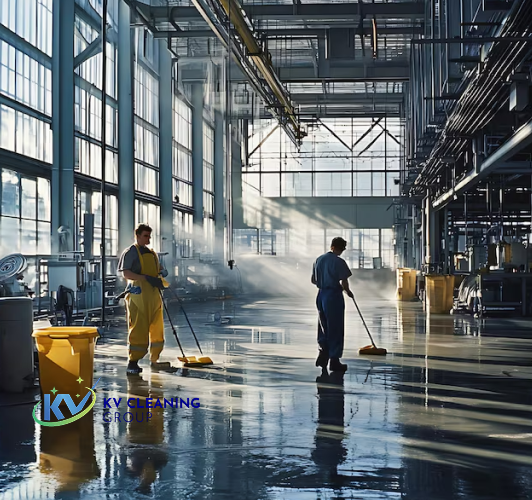
A factory cleaning plan works best when the facility is divided into practical zones: production floors, machinery surrounds, storage interfaces, loading areas and staff facilities. Each zone receives tasks and visit intervals suited to its surface, activity and access window.
Depending on the production process and agreed scope, factory cleaning may include:
For a useful site scope, share your production hours, shift pattern, floor types, material movement routes and the areas that require supervisor approval.
Production floors collect different materials during a shift, including fine dust, metal particles, oil marks, rubber transfer, packaging scraps and tracked-in dirt. A suitable method starts with the floor finish—such as sealed concrete, epoxy coating or other industrial flooring—and the residue present in that zone. This helps match sweeping, damp mopping, machine scrubbing and degreasing to the surface and site instructions.
Depending on the floor specification and residue, the cleaning plan may include:
For different floor finishes, read our guide to industrial floor cleaning methods by surface. Floor housekeeping also supports slip and trip risk control. SafeWork NSW explains how spills, oil, dust and wet surfaces affect workplace movement in its guidance on slips, trips and falls at the same level.
Production lines, assembly benches and packing stations each have their own cleaning sequence. The site scope should identify accessible floors, work-area edges, marked walkways, material staging points and staff access routes, with cleaning windows agreed around line changeovers and shift activity.
For food, beverage, packaging and general manufacturing facilities, the production or quality contact can identify hygiene zones, product-contact boundaries and surfaces assigned to the cleaning contractor. The cleaning method and products are then matched to those site instructions.
Cleaning can be scheduled before a shift, between production runs, during a changeover window or as part of a planned shutdown, according to site access and the production calendar.
Agree the handover point with the production supervisor so cleaned areas, access routes and any follow-up tasks are reviewed before the next production stage.
Machinery surrounds collect dust, residue and loose material around equipment bases, marked floor zones and service access points. The cleaning scope should identify the approved areas, exclusion zones and site procedures before a cleaner enters the work area. Tasks may include:
Internal machine cleaning, servicing and technical maintenance remain with the authorised maintenance team. The cleaning contractor works to the approved access boundaries, equipment status and instructions provided by the site supervisor.
A planned shutdown or changeover gives the site a defined window for detailed cleaning across areas that are difficult to access during normal production. Depending on the agreed scope, a shutdown clean may cover:
A shutdown plan can sequence loose-debris removal, accessible high-level dusting, floor cleaning, approved machinery surrounds and staff facilities. Read our guide to routine industrial cleaning versus shutdown cleaning when planning work around production stoppages.
A practical factory cleaning plan starts with the production process. A food packing line, metal workshop and component assembly floor generate different residues and use different equipment. A site review maps the work sequence, floor finishes, material movement, access routes and areas assigned to other teams.
When arranging a site review, share a floor plan where available, production hours, shift changes, traffic routes, forklift movement, cleaning priorities and the zones that require supervisor approval. These details help shape a practical cleaning sequence.
The written scope should record each zone, the task, the visit frequency, access instructions, products or equipment requirements and the person who signs off completed work. Use our guide to planning industrial cleaning around daily operations to organise the schedule around production.
Factory cleaning focuses on the production environment: floors around lines, accessible machinery surrounds, assembly zones, production support areas and staff facilities. A provider should understand the full factory environment, including production areas, equipment surrounds, storage interfaces, staff facilities and how cleaning fits around each shift.
The service scope should name the zones included, the cleaning method for each surface, the agreed frequency and the site contact responsible for access and handover. For broader plant, workshop and processing requirements, see our industrial cleaning service. For racking, storage aisles and dispatch operations, see our warehouse cleaning service.
When comparing providers, ask how they plan around production, how they handle machinery areas and how they review the program as your site changes. These answers show whether a company understands industrial environments.
KV Cleaning Group brings more than 22 years of industry experience. A strong factory cleaning proposal explains the work zone by zone: how methods match floor materials and residues, how cleaning fits production windows, which site documents and inductions apply, and how completed tasks are reviewed. You can also review our cleaning services to identify related support for your facility.
Share whether the site needs shift-based floor care, scheduled production-area cleaning, a weekend deep clean or a shutdown project. The visit plan should reflect residue build-up, surface condition, staff movement and the time available for access.
Request a written task list with inclusions, frequency, access instructions and a contact for operational changes. A short review after the first service helps confirm that the sequence and cleaning methods suit the facility.
A factory may use one schedule for production floors and another for staff amenities, loading areas and less frequently used surfaces. Choose the service pattern around the level of build-up and the production calendar:
A planned window between shifts gives cleaners time to attend priority walkways, floor zones and shared facilities before the next team starts.
A weekly visit can add detail to nominated areas such as accessible ledges, office sections, staff facilities and lower-traffic floor zones.
A recurring plan brings production floors, equipment surrounds and amenities into one task schedule, with separate frequencies for each zone.
Evening or overnight visits can suit sites with an agreed access window after the production team finishes its shift.
Weekend access can provide additional time for floor scrubbing, nominated high-level work and periodic cleaning tasks.
Periodic detail work can cover agreed high-level surfaces, floor edges, storage interfaces and areas that need a longer cleaning window.
A shutdown clean can be sequenced with the site supervisor around maintenance work, equipment access and the planned restart date.
One-off work can suit a factory move, fit-out handover, post-maintenance clean or a specific area requiring additional attention.
Provide your shift calendar, changeover periods and planned maintenance dates so the cleaning sequence can be built around the windows available at your site.
A metal fabrication workshop may generate swarf and grinding dust, while a food packing facility may need carefully separated hygiene zones. Packaging and plastics operations can create film offcuts, granules and fine dust. Each environment needs a cleaning plan that reflects its materials, process and site instructions.
Review the task list whenever a production line moves, a new material is introduced, traffic routes change or the operating timetable is updated.
Before work begins, identify the floor finish, residue type, nearby equipment, waste stream and any cleaning-product requirements provided by your production or safety team.
Sydney factories range from small engineering workshops to larger manufacturing and processing plants. The task list should follow the material being produced, the floor finish and the way employees and equipment move through the building.
A general manufacturing scope can cover production floors, line surrounds, walkways, waste points and staff facilities, with tasks assigned to each work zone.
Food and beverage sites can identify high-care and low-care zones, product-contact boundaries and the cleaning procedures used by the quality team. The agreed contractor scope follows those site controls.
Packaging and assembly areas can accumulate film, cardboard, labels, granules and general dust. Cleaning can focus on accessible floors, line surrounds, benches and transfer routes included in the task list.
Engineering and metalworking facilities may generate swarf, grinding dust, oil marks and workshop debris. The cleaning plan should identify approved floor zones, workbench surrounds and waste collection points.
Processing and component facilities can schedule floor care, equipment surrounds and staff-area cleaning according to the residue, work sequence and access rules at the site.
Automotive and component assembly areas can require regular attention to floor marks, loose packaging, workstations, walkways and shared staff facilities.
Factory cleaning should fit the production calendar. Share shift start and finish times, breaks, changeovers, delivery windows, maintenance periods and access rules so the cleaning sequence suits the way the site runs.
A zone-based schedule shows the production supervisor which areas are included, when cleaners need access and which tasks are completed during each visit.
When production volumes or shift patterns change, update the cleaning timetable and the priority areas with the site contact.
Factory floors have different traffic patterns. Production teams, forklifts, pallet jacks and delivery vehicles create repeated movement through selected routes. Those areas can be assigned a cleaning frequency based on site activity and the residue generated.
A zone-based inspection helps identify where dust, oil marks, packaging waste or tracked-in dirt collect most often. Our guide to planning cleaning zones in an industrial facility explains how to divide a large site into practical cleaning areas.
Periodic maintenance cleaning gives additional attention to areas that sit outside the regular shift-based checklist. According to the site layout and approved access arrangements, this may include:
Periodic work can be planned as a separate task list and scheduled alongside routine cleaning. For dust-control planning between visits, read our guide to reducing dust build-up in industrial work areas.
A defined factory cleaning program gives production teams a clear task list for floors, equipment surrounds, walkways and shared facilities. It supports day-to-day housekeeping and makes recurring maintenance easier to organise.
Routine attention to nominated production zones helps control the build-up of dust, loose packaging and general debris during ongoing operations.
Clean entrances, floors, staff facilities and shared areas present a well-maintained workplace to employees, suppliers, contractors and visitors.
Regular zone cleaning removes routine dust and debris, while periodic tasks address the areas that need a longer maintenance window.
A written schedule gives supervisors a reference for recurring work, periodic floor care and shutdown tasks.
Assigning tasks by zone helps the cleaning team follow the same agreed sequence and frequency across each visit.
Including pedestrian routes, loading interfaces and shared access points in the task list keeps these busy areas within the regular housekeeping routine.
A site-specific plan follows six practical stages from the first discussion to the ongoing service review.
Identify what the factory produces, the main work areas, the shift pattern and the routine residues generated through production.
Separate production floors, machinery surrounds, material staging, loading routes, staff amenities and factory offices into defined zones.
Select the agreed floor and surface methods according to the finish, residue, available equipment and site instructions.
Confirm inductions, PPE, exclusion zones, approved access windows and the site contact for each work area.
Agree the visit frequency, shift windows, inclusions, exclusions and any periodic or shutdown work.
Use the agreed checklist to review completed areas and update the scope when production, layout or access requirements change.
A 2,000-square-metre workshop, a multi-line food facility and a distribution-connected production plant have different cleaning demands. The service scope should account for floor area, production activity, traffic routes, surface condition and the time available for access.
The site review turns those details into a practical checklist with clear areas, methods, frequencies and access arrangements.
Review the plan when a production line changes, equipment moves, output increases or the site introduces a new shift.
Sydney’s factory network stretches from inner industrial areas around Botany, Alexandria and Silverwater to the Western Sydney employment precincts. NSW Planning’s 2025 Employment Lands Development Monitor records 20,210 hectares of zoned employment land across Greater Sydney, with 194 hectares taken up during 2024. Fairfield City Council reports nearly 3,000 businesses and 20,000 jobs in the Smithfield–Wetherill Park Industrial Estate, connected to the M4 and M7. These sites bring together different production processes, floor finishes, material routes and shift patterns.
KV Cleaning Group welcomes factory-cleaning enquiries from Smithfield, Wetherill Park, Eastern Creek, Huntingwood, Greystanes, Mamre Road, Silverwater, Auburn, Lidcombe, Granville, Parramatta, Blacktown, Liverpool, Botany, Alexandria and Mascot. Share your exact suburb and site details so the team can confirm service coverage and availability. Explore our Sydney service areas for location information.
Five practical answers about factory cleaning, production areas, machinery surrounds, scheduling and quotes in Sydney.
A factory cleaning scope can include production floors, walkways, approved machinery surrounds, loading areas, staff amenities and factory offices. The task list is set around the facility and its operating requirements.
The method is selected according to the floor finish, residue and site instructions. Sealed concrete, epoxy-coated floors and other industrial surfaces each require suitable products and equipment.
Yes. Cleaning can be planned around shift changes, breaks, changeovers, after-hours access and scheduled shutdowns. The timetable is agreed with the site contact.
Cleaning can cover approved, accessible machinery surrounds and floor zones. The site supervisor identifies exclusion areas, equipment status and any maintenance-only tasks before work begins.
Share your suburb, facility type, approximate floor area, production process, floor surfaces, priority zones, shift pattern and access requirements. Include planned shutdown dates and any site procedures.
Tell us what your facility produces, its Sydney suburb, approximate size, the areas that need cleaning and the type of work carried out on site. Include floor and surface types, shift times, preferred visit frequency, site access rules and any planned shutdown dates. These details help the team prepare a site-specific cleaning scope and quote.
Include these details so the team can review your factory cleaning requirements:
Practical commercial advice, maintenance checklists, and specialized procedures for Factory Cleaning across Sydney workplaces.
 Latest Trends
NSW Biological Hazards Code 2026: What Office Managers Should Know About Workplace Cleaning Biological hazards are ofte...
Read Full Article Industry Cleaning
Industrial Floor Cleaning Methods: How to Match Each Surface to the Right Equipment Industrial floors can accumulate du...
Read Full Article Industry Cleaning
What Is the Difference Between Routine Industrial Cleaning and Shutdown Cleaning? Routine industrial cleaning and shutd...
Read Full ArticleExplore real-world challenges, cleaning methodology, and measurable outcomes delivered for clients in Factory Cleaning.
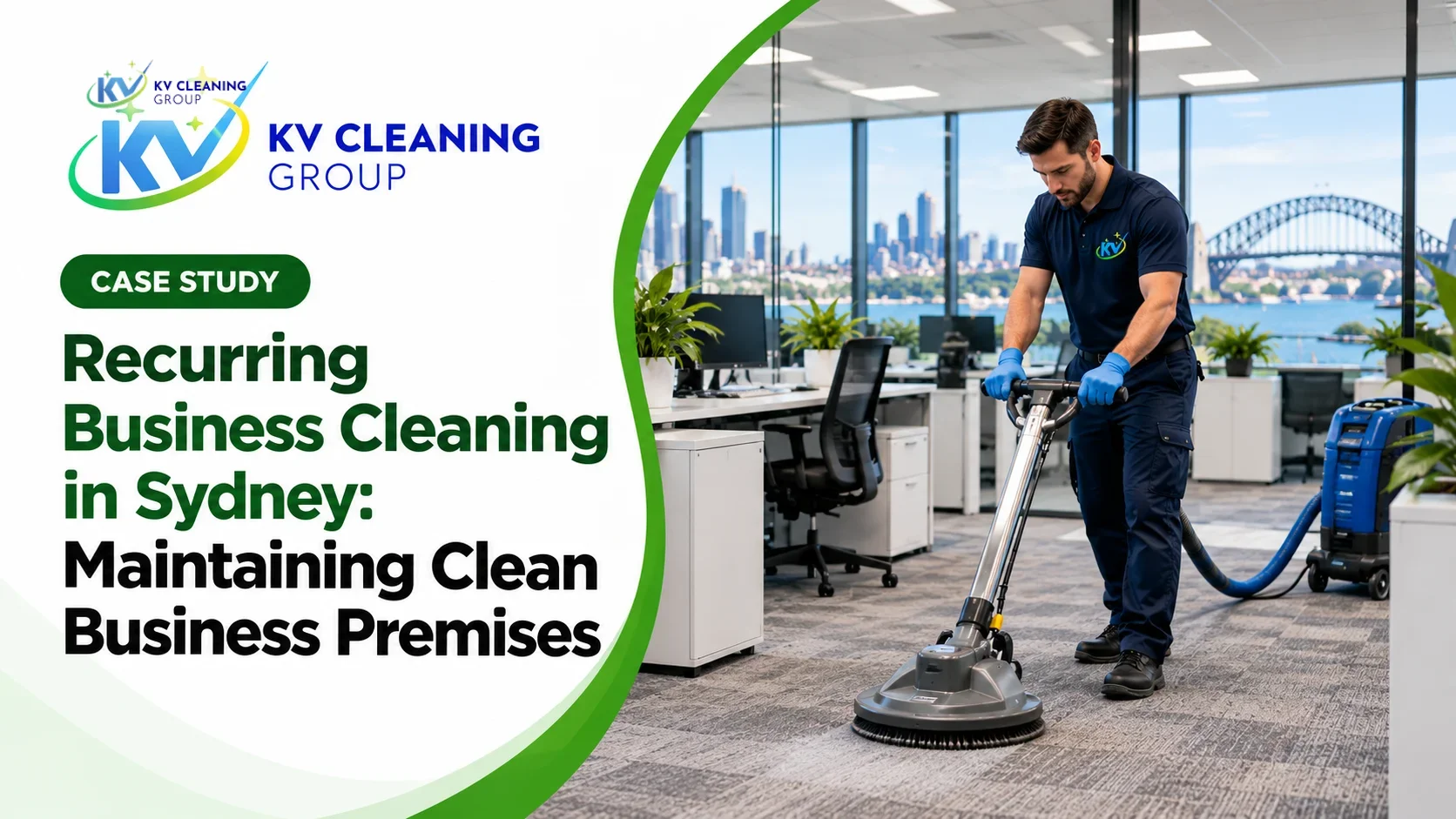 Business Cleaning
Recurring Business Cleaning in Sydney: Maintaining Clean Business Premises Service: Business CleaningLocation: Sy...
Explore Case Study DetailsHigh-resolution photos showcasing pristine surfaces, sanitized facilities, and attention to detail across Factory Cleaning sites.
Arrange factory cleaning around your facility’s production process, work areas, machinery surrounds, staff facilities and operating calendar. Contact KV Cleaning Group to discuss your requirements and request a tailored quote.
Level 2, Suite 239/65-71 Belmore Rd, Randwick NSW 2031, Australia
Phone: +61 485 961 400 View on Google Business Profile
85 Metella Rd, Toongabbie NSW 2146, Australia
Phone: +61 2 8530 7001
View on Google Business Profile
43 The Avenue, Granville NSW 2142, Australia
Phone: +61 2 8530 7001
View on Google Business Profile
Level 4/110 George St, Parramatta NSW 2150, Australia
Phone: +61 485 961 400
View on Google Business Profile
7 Sarsfield St, Blacktown NSW 2148, Australia
Phone: +61 485 961 400
View on Google Business Profile
154 O'Riordan St, Mascot NSW 2020, Australia
Phone: +61 485 961 400
View on Google Business Profile
42 Anderson St, Chatswood NSW 2067, Australia
Phone: +61 485 961 400
View on Google Business Profile