
Industrial premises bring together heavy-use floors, equipment surrounds, work areas, service routes and staff facilities. Dust, oil marks, metal particles, packaging debris and everyday residue collect in different places depending on the work carried out on site. A useful cleaning plan starts with those real conditions and sets out the tasks, access rules and visit frequency for each area.
KV Cleaning Group provides industrial cleaning services for suitable workshops, engineering premises, processing facilities and mixed-use operational sites across Sydney. The agreed scope can cover industrial floors, accessible equipment surrounds, work areas, walkways, amenities, offices and common facilities. We organise the work around site activity, traffic movement, operating hours and the areas your team wants maintained.
For production-line cleaning and machinery-zone work, see our production facility cleaning service. For racking, loading docks and dispatch areas, explore our warehouse operations cleaning service.
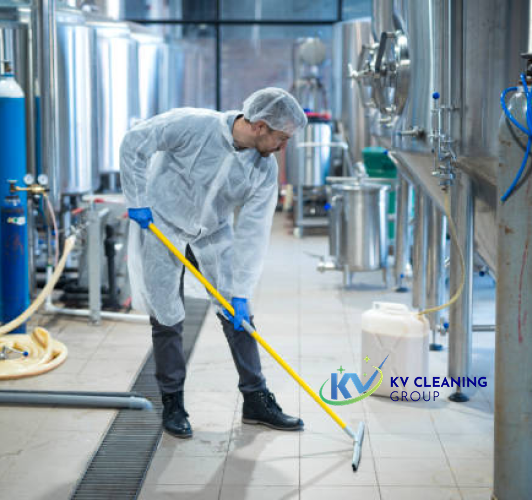
Each industrial property has its own layout and work pattern. A written task list can group the site into practical zones and show the cleaning method and frequency agreed for each one.
Depending on the facility and agreed scope, industrial cleaning may include:
For consistent coverage across a large property, use a zone-based checklist. Our guide to organising cleaning zones in an industrial facility explains how separate work areas can be scheduled.
Different parts of an industrial property collect different types of residue. Matching the task to the surface and work area helps build a practical maintenance plan.
Concrete, sealed floors, epoxy coatings and other industrial finishes respond to different cleaning methods. Foot traffic, trolleys, forklifts and material movement can also affect the type of dirt and residue left on a surface. The cleaning plan considers the floor specification, condition and approved products before a method is selected.
For a closer look at surface selection, read our guide to choosing suitable methods for industrial floor surfaces.
Engineering and maintenance workshops often have work benches, tool storage, service bays and shared work areas. Cleaning can cover approved floors, accessible surfaces, designated walkways, general waste points and staff facilities around the workshop.
Metal swarf, sharp offcuts, chemical residues and specialist waste streams are handled according to site controls and the contractor's agreed scope.
Equipment bases, service access points and surrounding floors can collect dust and general residue during daily operations. The site representative identifies the surfaces that cleaners can access and the equipment zones that remain under maintenance or operator control.
Internal servicing, electrical work, machine isolation and technical maintenance remain with the authorised maintenance team.
Lunchrooms, change rooms, washrooms, staff offices and shared corridors are important parts of an operational site. A separate task list can set the frequency for these spaces according to staff numbers, shift patterns and daily use.
Combining operational areas and staff facilities in one site schedule gives managers a clear view of what is covered during each visit.
The type of property affects the cleaning methods, access arrangements and level of coordination needed. Industrial cleaning gives greater attention to operational surfaces, machinery surroundings and worksite movement.
| Area | Industrial premises | Office and commercial premises |
|---|---|---|
| Typical spaces | Workshops, service areas, processing spaces and plant surrounds | Offices, reception areas, retail and shared commercial facilities |
| Common cleaning needs | Dust, residue, general debris, floor marks and operational waste points | Everyday dust, touchpoints, floors, kitchens and washrooms |
| Cleaning methods | Surface-specific sweeping, scrubbing and approved degreasing | Vacuuming, mopping and routine surface cleaning |
| Site coordination | Traffic routes, restricted zones, induction and equipment access | Building security, tenant access and business hours |
| Scheduling | Work shifts, maintenance windows and site activity | Office occupancy, trading hours and visitor activity |
| Service checklist | Zone-based task list with access instructions and frequency | Room-based task list with agreed visit frequency |
For day-to-day business premises, explore our business premises cleaning information and dedicated office service page.
Industrial cleaning takes place alongside equipment, work vehicles, storage systems and active work areas. A site walk-through helps identify approved cleaning zones, access points, exclusion boundaries and any surfaces that require a particular method.
Cleaning teams work to the access instructions and site procedures provided by the responsible manager. The agreed scope can include accessible floors, approved external equipment surfaces, service-area surrounds and nominated common routes.
Internal machine cleaning, electrical or mechanical servicing, machine isolation, confined-space entry, tank cleaning, asbestos work and hazardous-waste handling require the relevant authorised or specialist personnel. These activities are identified separately during scope planning.
Industrial cleaning plans work best when the site manager and cleaning supervisor agree on access, traffic movement and the tasks assigned to each zone. Before the first visit, share the site induction, restricted-area information, equipment boundaries, chemical requirements and the contact responsible for work approvals.
Forklifts and other mobile plant require particular attention when cleaners are working near operating areas. SafeWork NSW identifies incidents involving vehicles and other mobile plant as the leading cause of workplace fatalities in NSW. Its plant, machinery and equipment safety guidance explains the responsibilities and controls relevant to people working around equipment.
Build cleaning access into the site's traffic-management and work-planning process. This gives cleaners and site personnel a shared understanding of where work can take place and when an area is ready for access.
We begin with the property and its work pattern. The site review turns the areas that need attention into an agreed checklist, a practical cleaning sequence and a schedule that suits the operation.
Identify facility type, work areas, floor surfaces, access routes, amenities and the main cleaning priorities.
Group the property into practical areas so each task has a location, method and agreed frequency.
Record inclusions, exclusions, equipment boundaries, access requirements and the site contact.
Agree visit times and review the checklist when site activity, layout or cleaning priorities change.
A zone-based checklist makes the service easier to brief, complete and review. See our advice on dividing an industrial site into cleaning zones.
Industrial premises often have different activity levels across the day. Workshop teams, delivery drivers, maintenance personnel and office staff may use separate areas at different times. The cleaning schedule should reflect those patterns.
Cleaning can be planned before a shift, between agreed work periods, after operating hours, on weekends or during a scheduled maintenance window. Your site contact can identify the periods when each area is available and coordinate access with the relevant team.
Our guide to planning cleaning around daily industrial operations covers the details worth including in a site timetable.
Confirm the task sequence and access window with the site contact before each planned service period.
Some industrial areas need regular attention, while other tasks fit better into a scheduled maintenance window. The frequency is set according to site activity, surface conditions and the work included in the scope.
Recurring visits maintain nominated floors, access areas, amenities and shared workspaces as part of the normal site schedule.
Additional attention can be scheduled for agreed surfaces and zones that need more time than the regular task list allows.
Cleaning can be coordinated with planned maintenance, equipment access changes or a period of reduced site activity.
A separate visit can be scoped for a specific area, a premises change or a defined cleaning project.
Routine maintenance and shutdown work serve different purposes. Read our comparison of routine industrial cleaning and shutdown cleaning.
The cleaning checklist is shaped by the work performed at the property, the surfaces involved and the site procedures that guide access and maintenance.
Sydney's industrial and employment areas extend from the southern and inner-western corridors to the large employment precincts of Western Sydney. Each area supports a different mix of workshops, processing businesses, service facilities and supply-chain operations.
NSW Planning's 2025 Employment Lands Development Monitor records 20,210 hectares of zoned employment land across Greater Sydney, with 194 hectares taken up during 2024. These figures describe the wider employment-land network and its ongoing development.
In Western Sydney, Fairfield City Council reports that the Smithfield–Wetherill Park Industrial Estate is home to nearly 3,000 businesses and 20,000 jobs. The estate connects with the M4 and M7 motorways, Western Sydney Airport and a nearby intermodal terminal. This scale creates a varied operating environment for manufacturers, workshops, service providers and industrial businesses.
KV Cleaning Group lists contact locations in Randwick, Toongabbie, Granville, Parramatta, Blacktown, Mascot and Chatswood. Share your site's suburb and requirements so the team can confirm service coverage and availability. View the Sydney service areas.
Industrial managers need to know which areas are included, how often each task is completed and who coordinates access. KV Cleaning Group organises the service around a written task list, agreed operating windows and the site instructions supplied by your team.
The company lists seven NSW contact locations across Randwick, Toongabbie, Granville, Parramatta, Blacktown, Mascot and Chatswood. This network supports enquiries from businesses across Greater Sydney, with each site's coverage and schedule confirmed against its requirements.
For broader premises support, you can also review our case studies and customer testimonials.
A straightforward enquiry gives the team the information needed to assess your site and prepare a clear service scope.
Provide your suburb, facility type, approximate size and the main areas that need attention.
Describe workshops, floors, amenities, access routes and other zones included in the request.
Share operating hours, shift patterns, vehicle movement and the periods when access is available.
Provide induction requirements, restricted areas, equipment boundaries and relevant safety instructions.
Check the included tasks, visit frequency, timing, access arrangements and any separately scoped work.
Confirm the written scope and communication process before the cleaning schedule begins.
The quote reflects the work involved at your property. Sharing accurate site details helps the team assess the time, equipment and schedule required.
Floor area, number of work zones, surface types, access routes and amenities influence the scope and time required.
Dust levels, residue, floor condition, equipment access and the level of detail required affect the cleaning method.
Recurring visits, one-off projects, weekend access, inductions and approved work periods are considered in the proposal.
For a site-specific assessment, provide the work areas, expected frequency and operating timetable. You can also review our pricing information.
Tell us where your property is located, what work takes place on site and which areas need regular attention. The team can discuss a cleaning scope that reflects your facility, access requirements and operating pattern.
Answers to common questions about cleaning workshops, industrial facilities and shared operational areas.
A plan can be prepared for engineering workshops, maintenance facilities, processing premises, assembly support areas and mixed-use industrial properties. The site review identifies the areas, surfaces and tasks included in the service.
Routine cleaning can include general waste points and approved surface cleaning. Chemical waste, hazardous materials, asbestos, contaminated liquids and specialist waste streams require the relevant licensed or specialist contractor and site procedures.
Yes. A site scope can group workshop floors, approved equipment surrounds, staff rooms, washrooms, offices and shared access areas, with separate tasks and frequencies for each zone.
Provide the site induction, authorised access points, traffic routes, restricted zones, relevant safety procedures, cleaning priorities and the name of the site contact. Confirm equipment isolation and access permissions with the responsible site personnel.
Frequency is based on the site's activities, traffic, residue, surface types, amenities and operating hours. High-use areas may need more frequent attention, while detailed or high-level tasks can be planned periodically.
Share your site suburb, facility type, approximate floor area, work areas, preferred frequency and operating hours. Include any access rules, induction requirements, restricted zones or site procedures that shape the cleaning scope.
The team can review the details with you and confirm the proposed tasks, schedule and next steps for a written quote.
These details help identify the areas, methods and timing required for your property.
Practical commercial advice, maintenance checklists, and specialized procedures for Industrial Cleaning across Sydney workplaces.
 Industry Cleaning
Industrial Floor Cleaning Methods: How to Match Each Surface to the Right Equipment Industrial floors can accumulate du...
Read Full Article Industry Cleaning
What Is the Difference Between Routine Industrial Cleaning and Shutdown Cleaning? Routine industrial cleaning and shutd...
Read Full Article Industry Cleaning
How to Plan Cleaning Zones in a Busy Industrial Facility Planning cleaning zones in a busy industrial facility means di...
Read Full ArticleExplore real-world challenges, cleaning methodology, and measurable outcomes delivered for clients in Industrial Cleaning.
 Business Cleaning
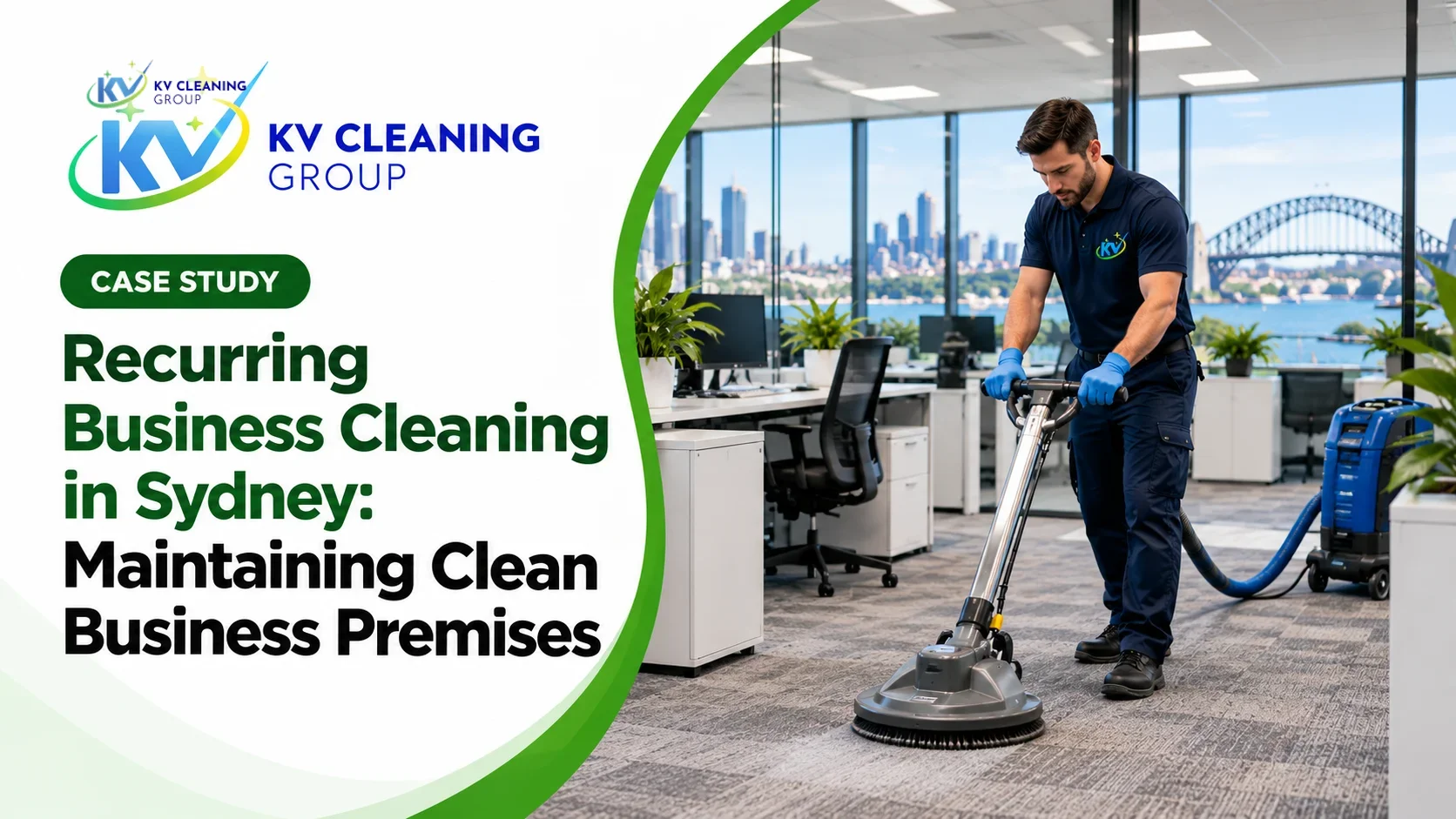
Recurring Business Cleaning in Sydney: Maintaining Clean Business Premises Service: Business CleaningLocation: Sy...
Explore Case Study DetailsHigh-resolution photos showcasing pristine surfaces, sanitized facilities, and attention to detail across Industrial Cleaning sites.
Tell us about your industrial property, the areas that need attention and the hours when cleaning can take place. KV Cleaning Group can discuss the next steps for your Sydney site.
Level 2, Suite 239/65-71 Belmore Rd, Randwick NSW 2031, Australia
Phone: +61 485 961 400 View on Google Business Profile
85 Metella Rd, Toongabbie NSW 2146, Australia
Phone: +61 2 8530 7001
View on Google Business Profile
43 The Avenue, Granville NSW 2142, Australia
Phone: +61 2 8530 7001
View on Google Business Profile
Level 4/110 George St, Parramatta NSW 2150, Australia
Phone: +61 485 961 400
View on Google Business Profile
7 Sarsfield St, Blacktown NSW 2148, Australia
Phone: +61 485 961 400
View on Google Business Profile
154 O'Riordan St, Mascot NSW 2020, Australia
Phone: +61 485 961 400
View on Google Business Profile
42 Anderson St, Chatswood NSW 2067, Australia
Phone: +61 485 961 400
View on Google Business Profile